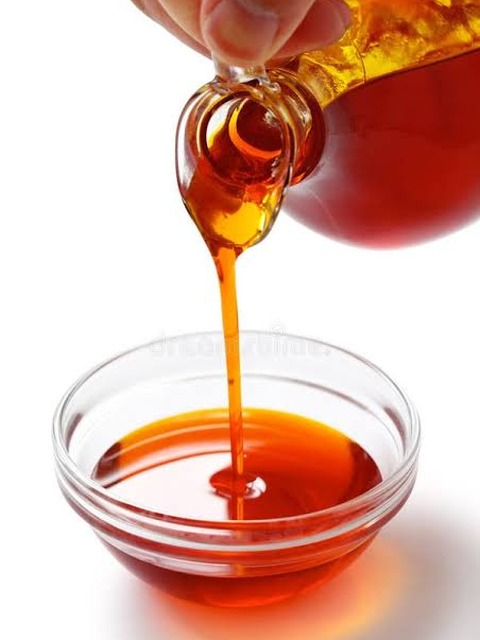
The challenge around crude palm oil - Viscosity
Palm oil is extracted from the mesocarp (fruit flesh) of the oil palm, It is the world’s most widely produced vegetable oil: about 90% is used in food, the rest in oleochemicals, soaps and cosmetics.
Why it is viscous
Large triglyceride molecules
Palm oil is made of triglycerides—a glycerol core attached to three (C16-C18) fatty acid chains. The large size and packing of these molecules generate significant intermolecular drag, resulting in high kinematic viscosity
High saturated fat content
About 50% of the fatty acids are saturated, mainly palmitic acid (≈44%). Straight saturated chains pack closely and promote stronger intermolecular interactions.
Partial crystallisation
High-melting fats begin to crystallise below ≈40 °C. With a melting range of 33–39 °C, palm oil is semi-solid at room temperature.
Why viscosity must come down
Continuous heating
Tanks, pipelines and tankers are held at ≈50–60 °C to keep the oil pumpable: a constant energy cost.
Pumping and transfer
HHigher viscosity raises pipeline pressure drop and pump power, and slows loading, unloading and transfer.
Processing and losses
Viscosity limits throughput in filtration, refining and fractionation, and increases oil retained in tanks and lines.

- Size
- 200×166 mm
- Thickness
- 4 mm
- Weight
- 318 g
About the Femto device
The Femto device is a compact, tablet-shaped passive unit. On the outer surface of the storage tanks and pipelines and work on contactless manner, so the process and equipment remain unchanged.
Installation
Devices are mounted externally on the wall of the storage tank or pipeline. There is no direct contact with the oil and no modification to the fluid-handling system.
Electromagnetic interaction
The devices are designed to interact electromagnetically with the liquid across the specified frequency range.
Molecular modification
The treatment is designed to modify intermolecular interactions and molecular association, particularly among the heavier components of the oil.
Flow behaviour
Altered molecular interactions change the internal resistance to flow, giving a reduction in viscosity. No additives are introduced and no material is removed.
Physical Change
The changes in viscosity are of permanent nature and irreversible.
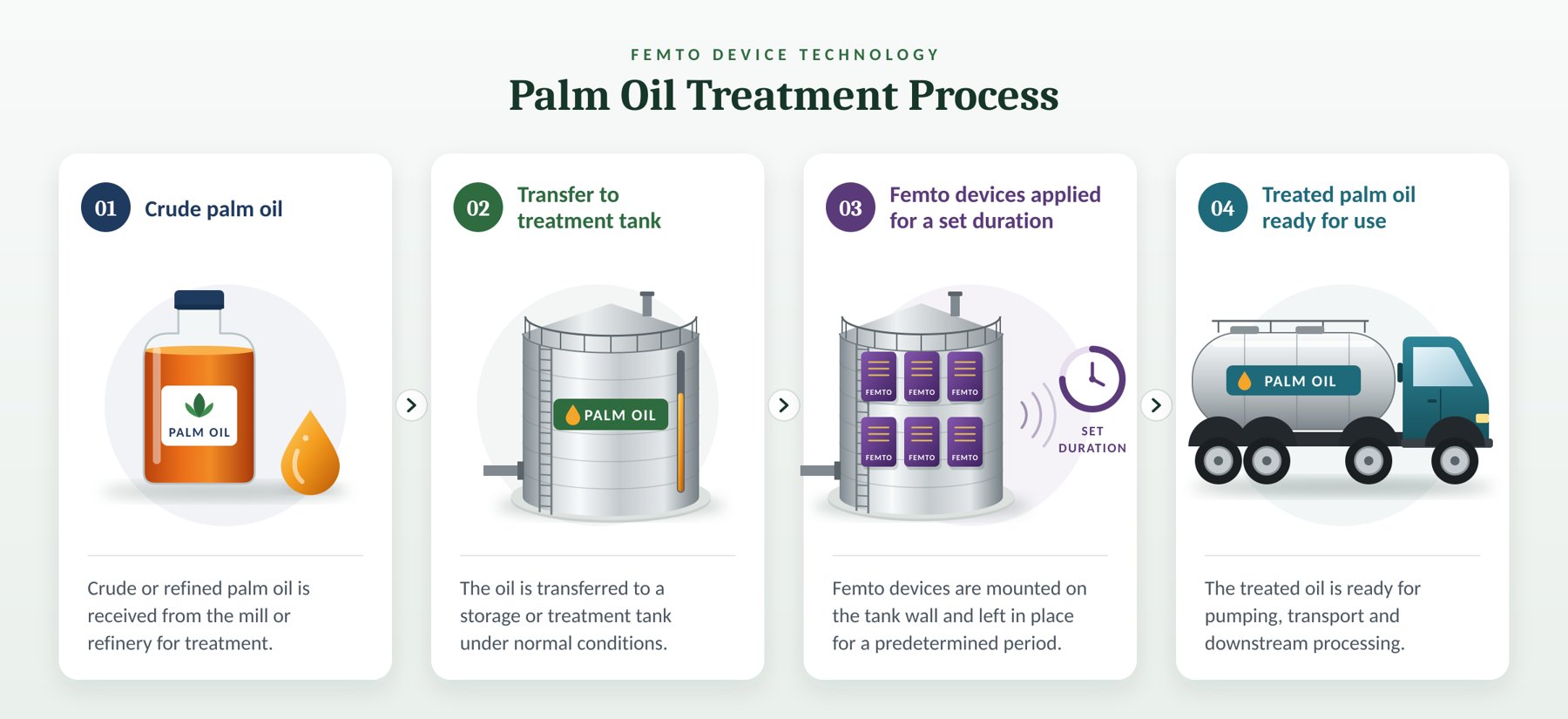
Low viscosity CPO ready for use
Side-by-side flow comparison of untreated and Femto-treated sample
Untreated
Untreated palm oil (reference sample)
Femto-treated
The same oil after Femto treatment
The comparison provides a qualitative indication of differences in flow behaviour
Lower viscosity translates directly into lower energy use and efficient logistics
These are the expected effects of any viscosity reduction in palm oil. A pilot trial will quantify them for your oil and your site.
Reduced heating demand
The oil reaches a pumpable viscosity at a lower temperature, cutting the energy used to heat tanks and lines.
Lower pumping energy
In laminar pipe flow, pressure drop is directly proportional to viscosity: A lower viscosity can therefore reduce the pressure required to maintain a given flow rate.
Faster handling
Shorter loading, unloading and transfer times at mills, refineries, bulk terminals and ports.
Improved processing
Reduced viscosity may improve flow through filters, heat exchangers and fractionation equipment and may reduce oil retained in tanks and lines
Addresses the root cause
Palm oil’s viscosity comes from large triglyceride molecules and strong intermolecular interactions. The Femto device is designed to act on these interactions directly.
Directly relevant to palm oil
Palm oil handling is governed by viscosity and managed today with heat. Reducing viscosity lowers heating, pumping and processing costs.
Simple to deploy
Passive, non-contact and additive-free. Installs on existing tanks and lines without modifying equipment or process.
Next step: a pilot trial
Treat a production batch and have an independent laboratory measure viscosity before and the treatment.